Artificial Intelligence on the Battlefield: How Ukrainian Unmanned Ground Vehicles are Evolving
Ukraine's defense industry is actively integrating artificial intelligence into unmanned ground vehicles to minimize operator dependency and protect equipment from electronic warfare.
 🛡️Security
Photo: RBC-Ukraine
Key points
- Ukrainian UGVs are transitioning from manual control to automated processes.
- Key technological solutions include autopilots, Backtrack functions, and AI integration.
- Algorithm training combines real combat footage with synthetic datasets.
The modern military industry in Ukraine is gradually transforming from manual control of ground platforms to deep automation and complete mission autonomy. As noted in specialized reports, a key obstacle to the effective use of unmanned ground vehicles has long been their rigid dependence on uninterrupted communication with the operator. When navigating complex frontline terrain, equipment risks being lost if the signal drops entirely.
To address this challenge, engineers are developing several key technological areas. These include autopilot systems capable of independently plotting paths around obstacles and the Backtrack function, which allows the machine to return along its traversed route if communication is lost. Specialists are also paying close attention to integrating artificial intelligence to identify threats, particularly from enemy FPV drones.
Technological Challenges and System Training Methodology
Developing full autonomy requires significant financial resources, time, and the involvement of highly qualified engineers. Consequently, Ukrainian developers are progressing step-by-step: first automating individual route segments and eventually covering the majority of the mission. The long-term goal is to build a unified ecosystem where ground and aerial unmanned systems interact seamlessly.
The main challenge for artificial intelligence remains achieving high accuracy in threat detection amidst dust, poor visibility, and constant electronic warfare interference. To accelerate model training, developers combine real combat footage with massive synthetic datasets, ensuring algorithms can reliably navigate frontline environments.
Source RBC-Ukraine — rbc.ua/ukr/news/nrk-aktivno-vikoristovuyut-shi-shcho-mozhut-1795429… ↗
Read next
 🚨Events
Kyiv Police Detain Man for Robbing a New Acquaintance’s Apartment After a Date
Law enforcement officers in Kyiv detained a 41-year-old local resident suspected of stealing valuables from a woman's apartment after a joint evening together.
 🩺Health
Scientists Identify Two Critical Peaks of Immune System Aging
New research reveals that the human immune system ages in two rapid bursts, occurring around the ages of 40 and 60.
 🎓Education
Historical Discovery: How Accidental Plowing Revealed the Secret of an English King's Medieval Artifact
An ordinary agricultural task in late 17th-century Britain helped uncover a unique piece of jewelry associated with King Alfred the Great.
 🧠AI Analysis
Poland to Summon Russian Ambassador Over Missile Incursion During Attacks on Ukraine
The Polish Foreign Ministry is summoning the Russian ambassador after three missiles entered Polish airspace during strikes on Ukraine.
Former Deputy Prime Minister Oleksiy Chernyshov Served Notice of Suspicion Over Fictitious Employment
NABU exposed former Deputy Prime Minister of Ukraine Oleksiy Chernyshov for orchestrating a budget embezzlement scheme by employing personal drivers and bodyguards as min…
 🧠AI Analysis
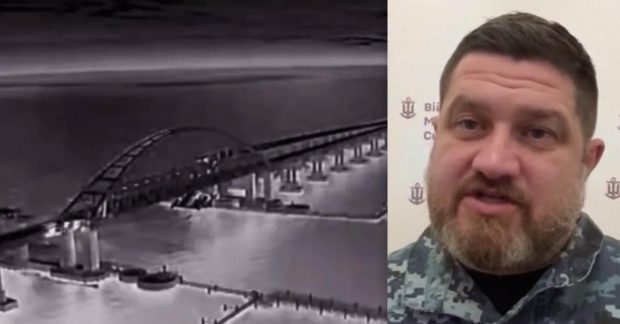
Crimean Bridge Strike: Russia May Struggle to Lift Sunk Arch, Says Navy
Following a successful strike on the Kerch Strait Bridge, a fallen metal arch has blocked navigation, while Russia lacks the technology to easily lift it.